Showing posts with label fiber. Show all posts

Sunday, October 2, 2022

Pectin and banana

Bananas are a good source of pectin, a form of fiber. Pectin is an excellent carbohydrate polymer and is the structural component of plant cell wall. It is isolated from fruit peels and has been attributed to various applications. Chemically, pectin is poly α-1, 4-galacturonic acid, with varying degree of methylation of carboxylic acid residues.

Pectin with more than 50% methyl ester groups is classified as high-methoxyl (HM) and those with less than 50% methyl ester groups as low-methoxyl (LM). Pectin is broadly utilized both in the food (as gelling, thickening, and stabilizer agent) and in pharmaceutical (as bioactive components) industries including biomedical applications as inventive uses

Pectin form gels under certain circumstances, the gelling mechanism is highly dependent on the degree of methoxylation (DM).

Pectin yield from banana pulp decreased significantly with ripening (P<0.05) from between 18.1 to 22.65% at green maturity to between 0.65 to 1.28% at stage 7 of ripening. Pectin yield from banana peels was generally lower decreasing from between 5.34 to 6.61% at green maturity to between 1.01 to 1.38% at stage 7. (Journal of Food Research; Vol. 9, No. 5; 2020)

It was reported higher pectin content in banana peels compared to plantain peels at all the stages of maturation, with the average molecular weights of the extracted pectin in the range of 132.6 - 573.8 kDa.

Some of the pectin in bananas is water-soluble. When bananas ripen, the proportion of water-soluble pectin increases, which is one of the main reasons why bananas turn soft as they age.
Pectin and banana

Friday, January 28, 2022

Dietary fiber in banana fruit

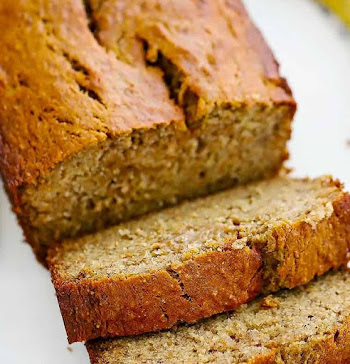
The use of unripe banana to prepare flour might be advantageous because the fruits with damage on the peel or those that fall as a result of cyclones and hurricane can be used for this purpose.

One of the important components of unripe banana flour is dietary fiber, 10.0-14.5% (dry basis) in Musa paradisiaca.

Total dietary fiber in banana flour for diverse Brazilian varieties and cultivars ranged between 6.3% and 15.5%.

Bakery products with banana flour have a low glycemic index and could be used as a dietary aid for people with low caloric requirements.
One small (six inch) banana or a half cup of sliced banana has 2.6 g dietary fiber.

Fiber from green, unripe bananas dramatically reduces the ‘bad’ (LDL) cholesterol and increases production of ‘good’ (HDL) cholesterol by up to 30%. Fiber rich diets have been linked to lower risk of coronary heart disease.
Dietary fiber in banana fruit

Tuesday, January 4, 2022

Banana pseudo-stem

The pseudo-stem of banana plant is the stem of banana plant that provides and transports nutrients from the soil to the fruits.

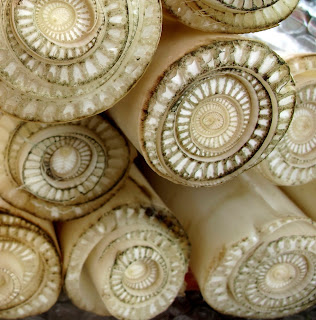
The banana pseudo-stem consisted of leaf sheaths, which are arranged in overlapping layers. The pseudo-stem is a part of the banana plant that looks like a trunk, which consists of a soft central core and tightly wrapped up to 25 leaf sheaths. These leaf sheaths unwrap from the stem and transform to recognizable banana leaves when they have matured.

The center core of banana mainly comprises of about 90 per cent of water. Apart from water, the pseudo-stem of banana contains several polymers such as cellulose, hemicellulose, pectin, and lignin that constitute fibers with good mechanical properties.

Lignocellulose constitutes about 60%–85% dry weight of the banana pseudo-stem sheath, in which cellulose accounts for about 50%. The composition of lignocellulose determines the nature and quality of fibers as these compounds are the major constituents of plant fibers that provide structural strength to the plant.

This pseudo-stem will be cut and become waste biomass after the banana fruit is ripe and harvested, because the banana plant is unusable for the next harvest.

The banana pseudo-stem sap can be orally taken or externally applied for stings and bites. Banana center core also known as pseudo-stem, is a biological waste in banana plantations could be effectively utilized as a source for incorporation in bakery food products preparations by converting them into flour.

Nanocellulose from banana pseudo-stem has great potential to be formed as a bioplastic. Demand for bioplastic, especially for food packaging, increases as the consumers become more aware of the destructive effect of non-biodegradable plastics.

The banana pseudo-stem has also been considered for use as pulp and paper raw material, fiber for textiles, and filler or structural reinforcement in composites materials.

Banana fiber, the cellulosic fibers obtained from the pseudo-stem of banana plant is a bast fiber with relatively good mechanical properties. Banana fiber, also known as musa fiber is one of the world's strongest natural fibers. The fiber consists of thick-walled cell tissue, bonded together by natural gums and is mainly composed of cellulose, hemicelluloses and lignin. Biodegradable, the natural fiber is made from the stem of the banana tree and is incredibly durable.
Banana pseudo-stem

Saturday, June 10, 2017

Eating banana helps lowering cholesterol

Bananas are great sources of potassium, an essential mineral for maintaining normal blood pressure and heart function.

The banana's high fiber content helps to lower blood cholesterol. It is said that pectin which is a soluble fiber in banana has been shown helping to lower cholesterol levels.
According to researchers, fibers that are water soluble such as pectin, psyllium, beta-glucan etc., lower the LDL cholesterol without disturbing the HDL cholesterol.

Banana has lubricating effect on the intestine. It detoxifies the body by providing plenty of soluble fiber that absorbs cholesterol and cleanses the intestines.
Eating banana helps lowering cholesterol

Tuesday, October 21, 2008

Banana and Nutrition

Banana and Nutrition
Through out the western non-Mediterranean world, there has been since the 1970s a steadily rising awareness of the importance of diet to health. There is now little doubt that choice of diet contributes to the risk of developing diseases such as heart disease, strokes, some cancers, diabetes, bowel disease, gallstones, dental caries and osteoporosis – though to what degree is not yet known.

Northern Europe and United States, have sought with varying degrees of success to reduce saturated fat consumption, i.e. sugar not contained within the cell wall of a plant or animal food. By comparison, bananas contain their sugar content – fructose, sucrose and glucose – intrinsically, as well as containing substantial amounts of fiber (non-starch polysaccharides) which is helpful for digestion. Unripe banana contain ‘resistant’ starch, which is indigestible in the human small intestine. The nutritional qualities of the banana actually change with ripening, the sugar percentage rising form 2% to around 23% and the starch percentage falling from 23% to 1%.

Banana is high in vitamin B6, which helps fight infection and is essential for the synthesis of heme, the iron containing part of hemoglobin. The banana is a good source of vitamin C, needed to help fight infections. The combination of a good amount of potassium and low sodium may help protect against high blood pressure. As an easily digestible source of fiber, the banana is valuable in preventing both diarrhea and constipation. It has a creamy texture often associated with fatty foods, yet is virtually fat free.
Banana and Nutrition

The most popular posts

Other selected articles

  • The Domain Name System (DNS) is often described as the “phonebook of the Internet” because it translates human-friendly domain names into Internet Protoc...
  • Cream cheese is a soft, mild-tasting fresh cheese made primarily from milk and cream. Unlike aged cheeses, it is not matured for long periods and is int...
  • Cheese curls are light, crunchy snack foods made primarily from cornmeal. Recognizable by their small, curved shapes and bright cheese coating, they are ...
BannerFans.com BannerFans.com